AI Companion Robots for Kids in 2026: What Years of Moxie, Cozmo, and Vector Use Have Taught Us
The pitch for AI companion robots aimed at children has been the same for almost a decade: a small physical character that talks to your kid, plays games with them, helps them with social-emotional learning, and feels alive in a way a tablet app never quite manages. The promise has been better than the delivery in basically every product that’s tried it, and the most prominent example — the Moxie robot from Embodied — became the cautionary tale when the company wound down in late 2024 and bricked the robots that customers had paid $1,500 for. This article looks at what the past few years of these products have actually revealed about the category, what kids and parents say after months of real-world use, and where the next generation might land.
The shape of the category
AI companion robots for kids are a small but distinct slice of the toy market. They’re more expensive than typical toys ($300-$1,800 range), they require some kind of network connection, and they pitch themselves on social-emotional benefits rather than entertainment. The big four examples that defined the category:
- Moxie (Embodied, 2020-2024) — a tabletop robot with an animated face, conversational AI, and a curriculum of social-emotional missions. Discontinued.
- Cozmo (Anki, 2016-2019, then Digital Dream Labs 2020-2024) — a treaded mobile robot with a personality and a coding app. Anki shut down, the IP changed hands twice, currently dormant.
- Vector (Anki, 2018-) — Cozmo’s older sibling, more of an always-on companion. Currently kept alive by Digital Dream Labs but with reduced cloud features.
- Loona (KEYi Tech, 2022-) — a four-legged robot with a screen face. Still shipping but in low volumes; a category outsider that survived where the bigger names didn’t.
What’s striking about that list is how thin the survivor count is. The category has had real venture capital, real product effort, and real customer demand — and most of the products that defined it are no longer for sale.
What worked, by parent reports
Looking through forums, subreddits, and the long-running parent reviews on the Moxie subreddit before it went quiet, a few consistent themes emerge about what these robots actually delivered when they were working:
- Conversational practice for kids who struggle with social interaction. The most consistently positive reports came from families with kids on the autism spectrum or with social anxiety. The robot was a low-stakes practice partner — it didn’t judge, it didn’t get tired, and the missions were structured around perspective-taking and emotional vocabulary.
- Engagement when the routine was new. Almost every family reported the first 4-8 weeks as a real win. Kids would talk to the robot for 20-40 minutes a day, look forward to interactions, and treat the robot as a real character.
- Gentle bedtime/wind-down rituals. Several parents mentioned using the robot’s structured story or breathing-exercise modes as part of a wind-down routine that worked better than screen time.
- An entry point for emotional vocabulary. Younger kids picked up words like “frustrated”, “disappointed”, “proud” through the robot’s modeling. This was the explicit design goal of Moxie’s curriculum and the part that got the strongest reviews.
What didn’t work
The flip side, also consistently reported:
- Engagement collapse after the first 2-3 months. Almost universally, kids’ interest dropped sharply after the novelty wore off. Robots ended up unplugged in closets within a year of purchase. This was true even for kids who initially loved the device.
- Conversational repetition. The dialogue trees, even when LLM-augmented later in product lifecycles, were limited enough that kids quickly started predicting responses. “Moxie says the same thing every time I tell her I’m sad” was a common complaint.
- Hardware reliability issues. Joints stopped working, microphones degraded, the battery life degraded faster than the marketing implied. For a $1,500 device, the failure rates parents reported were high.
- The cloud dependency. Every one of these robots was a cloud-dependent product. When the cloud went down (planned maintenance, network issues, eventually the company shutdown), the robot became useless or barely functional. Moxie’s most-cited failure mode wasn’t the discontinuation itself — it was the months of degraded service before the discontinuation, when the cloud was already overloaded and conversations took 30 seconds to start.
The Embodied wind-down and what it meant
In late 2024 Embodied announced they were shutting down. The Moxie robots that thousands of families had bought, many of them as Christmas presents the previous year, would lose cloud connectivity and become inert. Embodied tried to pursue an offline mode but the codebase was too tightly coupled to the cloud APIs and the engineering work to extract a usable local mode was beyond the runway. A community-led effort to reverse-engineer the protocol had limited success and produced a partial offline mode for a small fraction of original features.
The lesson the industry took from this: cloud-dependent toys are a financial risk for customers and a reputation risk for the category. The next generation of AI companion robots — the ones being announced for late 2026 and 2027 — almost all advertise local-first or hybrid local/cloud architectures. “Works without an internet connection” is now a marketing point.
What the next generation looks like
A few products are trying to learn from the Moxie postmortem and the broader category collapse:
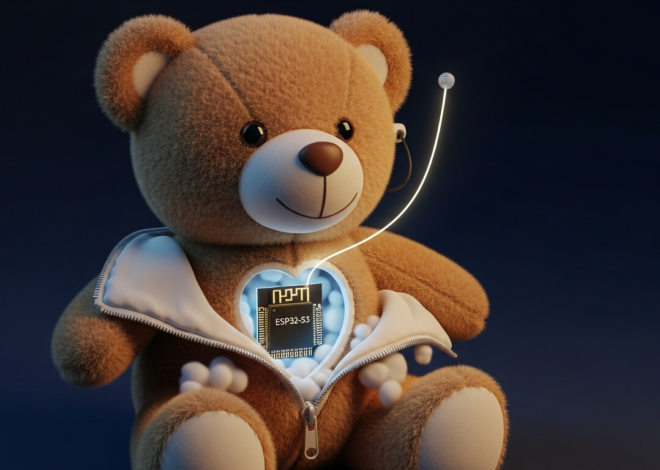
- Local-first conversation. On-device Whisper for speech recognition, on-device small language models (Phi-3, Gemma-2B, Llama-3.2-1B variants) for conversation, and cloud only for long-term memory or content updates. This adds hardware cost but eliminates the catastrophic discontinuation risk.
- Ownership of the firmware after end-of-life. A few smaller players are committing in writing to release the firmware as open-source if they discontinue the product. This is the toy equivalent of the open-source escrow that some software vendors offer.
- Subscription transparency. The new products are more upfront about which features need a subscription and what happens when you stop paying. “You’ll lose voice updates and curriculum content but the basic interaction stays” is the kind of language that didn’t exist in the Moxie marketing.
- Lower price points. The next generation seems to be aiming at $200-500 rather than $1,500. Lower stakes for parents, better fit with the actual engagement curve (most kids drop the toy after a few months regardless of how well-built it is).
Should you buy one in 2026?
The honest answer for most families is: probably not, unless you have a specific use case that justifies the cost and the inevitable lifecycle. The cases where it might be worth it:
- Your child is on the autism spectrum or has specific social-emotional learning goals, and the structured curriculum of one of these robots would supplement therapy. Talk to the therapist first; some specialists actively recommend these tools and others actively warn against them.
- You’re treating it as a 6-month interactive toy rather than a long-term companion. Set expectations accordingly and don’t pay $1,500 for it.
- You have an interest in the technology itself and want to see what consumer-grade AI robotics looks like in 2026. Treat it as a hobbyist purchase, not a parenting tool.
The cases where you should not: if you’re hoping the robot will replace screen time long-term, if you need a reliable bedtime routine that won’t depend on a cloud service staying online, or if your budget can’t absorb the loss when the company shuts down.
AI companion robots for kids are a category that’s been around long enough to have a real track record, and the track record is mixed. The products work well for the first few months for most kids and beautifully for a small group of kids with specific needs. They almost always lose their appeal after the novelty wears off, the hardware fails faster than expected, and the cloud-dependent business models tend to collapse before customers feel they got their money’s worth. The next generation looks more honest about all of this. Until those ship and prove themselves, the category is best treated as an experiment rather than a household staple.