
Smart Toys Are Still Dumb (And Creepy)
The holiday hangover is real, and I’m not talking about the eggnog.
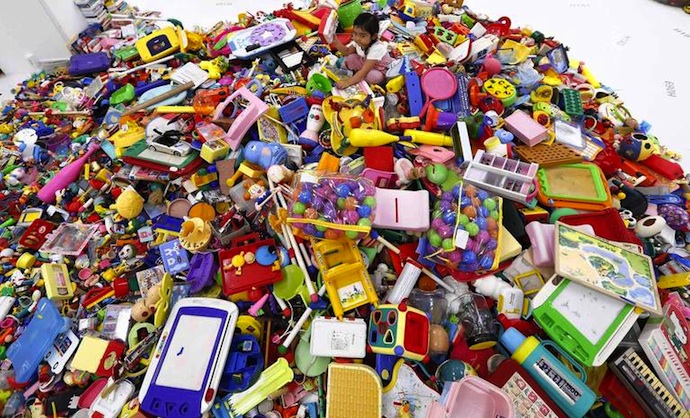
I’m looking at a pile of plastic in the corner of my living room. It’s January 9th. The tree is gone, but the debris remains. Among the wreckage of the 2025 holiday season—somewhere between the classic wooden blocks and the inevitable mountain of plushies—sits a “smart” companion robot that my aunt bought for my five-year-old.
It’s currently bricked. Dead. Because it lost Wi-Fi connection during a firmware update.
And honestly? I’m relieved.
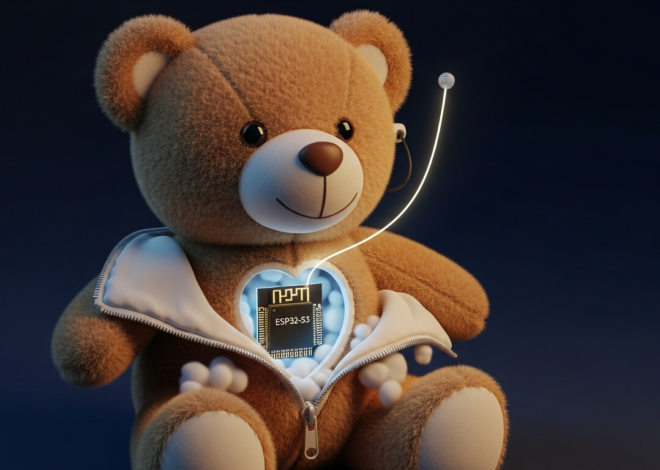
We need to talk about this push to shove Large Language Models (LLMs) into teddy bears. There’s been a lot of noise lately about major toy companies pushing back their launch dates for these AI-enabled “best friends,” and frankly, if you’ve tried to set one up recently, you know exactly why. They aren’t ready. And I’m not sure I want them to be.
The “Best Friend” that harvests data
Here’s the thing that keeps me up at night. Not the blinking LED eyes—though those are nightmare fuel in a dark hallway—but the Terms of Service nobody reads.
When you hand a kid a toy that connects to the cloud to “process natural language,” you are essentially putting a wiretap in the playroom. I ran a packet sniffer on that robot before it died (yes, I’m that kind of paranoid nerd). The amount of traffic it was trying to send back to a server in a jurisdiction I couldn’t immediately identify was… unsettling.
We’re told it’s for “personalization.” The toy learns your kid’s name, their favorite color, their dog’s name. Cute, right? Until you realize that data profile is being built by a company whose primary business model probably isn’t hardware sales—it’s data.
Privacy advocates have been screaming about this for months, and they’re right. If a toy can listen, it can record. If it can record, that audio has to go somewhere to be processed. Unless the toy is packing an H100 GPU inside its plastic skull (spoiler: it’s not), that voice data is leaving your house.
Latency kills the magic
Putting aside the dystopian surveillance vibes for a second, let’s talk about the actual experience. It sucks.
I tried having a conversation with one of these “next-gen” AI toys at a tech demo last November. Me: “Tell me a story about a dragon.” Toy: [Spinning blue light for 6 seconds] Toy: “I’m sorry, I cannot connect to the story server. Please check your app.”
Kids have zero patience. Zero. If the response isn’t instant, they walk away. The latency introduced by cloud processing breaks the illusion of life immediately. A stuffed animal doesn’t lag. A stick doesn’t need a reboot. The “dumb” toys win because they work at the speed of a child’s imagination, not the speed of a congested API.
Plus, have you heard these things hallucinate?
I saw a clip on social media a few weeks back where a kid asked a smart bear what to do if they scraped their knee. The bear, trained on who-knows-what internet scrapings, started rambling about “applying a tourniquet.” That’s the problem with probabilistic text generators. They don’t know what a child is. They just know what words likely follow other words.
Displacing the messy work of growing up
This is the part that actually worries me more than the privacy stuff. The privacy stuff I can fix with a router firewall. The developmental stuff? That’s harder.
Advocacy groups are right to flag that these toys disrupt relationships. When a kid plays with a doll, they provide the voice. They decide the personality. They project their own emotions onto the object, working through their own little chaotic feelings.

When the doll talks back with a pre-scripted, AI-generated personality, that loop breaks. The child becomes a passive consumer of content rather than an active creator of play. It’s the difference between reading a book and watching YouTube. One forces your brain to build the world; the other just feeds it to you.
I watched my daughter play with that robot for the ten minutes it worked. She stopped making up stories. She just kept asking it questions, waiting to be entertained. “What’s your name? What do you like? Tell me a joke.”
It turned play into an interview.
The subscription trap
And let’s not ignore the wallet-drain. You buy the hardware for $150, but oh wait—you want the “advanced conversational model”? That’s $9.99 a month. You want the “bedtime story pack”? Another $4.99.
It’s the “enshittification” of the toy box. Everything has to be a service now. I miss the days when you bought a toy, and you owned it. It didn’t need an account. It didn’t need an email address. It just sat there and let you throw it across the room.
Why the delays are a good thing
So when I see headlines about these products getting delayed or recalled for “tuning,” I don’t see it as a failure of tech. I see it as a momentary sanity check.
Maybe the tech just isn’t compatible with childhood. Not yet. Maybe never.
We’re trying to solve a problem that doesn’t exist. Kids don’t suffer from a lack of talking plastic. They suffer from a lack of attention from actual humans. An AI toy is a cheap substitute for a parent or a friend, and kids—being the incredible bullshit detectors they are—know the difference.
My advice? If you’re looking for a late gift or planning for a birthday in 2026, skip the AI aisle. Buy some LEGOs. Buy a cardboard box. Buy something that requires your kid to do the heavy lifting.
As for the bricked robot in the corner? I think I’m going to leave it there. It’s doing a great job as a paperweight, which is honestly the safest thing it can be.