
Santa’s AI Beta Test Just Changed the Toy Industry
I spent way too much time on the NORAD Santa Tracker last month. Usually, this is a ritual I endure for the sake of my nieces and nephews—refreshing a browser to see a pixelated sleigh hovering over Madagascar while trying to explain time zones to a five-year-old. It’s charming, sure, but historically? Pretty boring.
But Christmas 2025 was different.
If you missed it because you were busy fighting with wrapping paper or arguing about politics over ham, you missed what I’m calling the most successful public beta test for consumer AI in the last five years. NORAD didn’t just track a sleigh; they deployed a full stack of generative tools that turned passive screen-staring into a weirdly addictive creative loop. And honestly? It terrified me a little. Not because of the tech itself—we’ve seen image generators before—but because of how effectively it hooked a generation of kids who usually have the attention span of a gnat.
We need to talk about what this means for the toy industry in 2026, because the bar just got raised. If a military command center can figure out how to make AI fun and safe for six-year-olds, Mattel and Hasbro are officially out of excuses.
From Watchers to Makers
Here’s the thing about Gen Alpha: they hate watching. They want to do stuff. The old model of “here is a cartoon, sit still and consume it” is dying a slow, painful death. That’s why Roblox is a juggernaut and linear TV is for waiting rooms.
The genius of the recent Santa Tracker update wasn’t the 3D mapping (though that was slick). It was the “Elf Selfie” engine and the toy idea generator. My nephew didn’t just look at the screen; he uploaded a photo, tweaked parameters, and generated a stylized elf version of himself. Then, he spent forty minutes—forty actual, consecutive minutes—describing a “rocket-powered dinosaur with laser wings” to the toy idea generator.
The AI didn’t just spit out an image. It created a printable coloring page.
That right there? That’s the bridge everyone has been missing. It took a digital obsession and grounded it in physical play. He spent the next hour coloring the thing he had just “invented.” The screen wasn’t the destination; it was a tool to make something real.
This completely flips the script on the “screen time is bad” argument. If the screen is helping the kid design a physical object or activity, the guilt factor for parents drops to near zero. I watched my sister-in-law go from “put the iPad away” to “oh, print one for me too” in about thirty seconds.

The “Sticky” Factor
Retention is the metric everyone lies about. Companies brag about download numbers, but they rarely tell you how many people are still using the app three days later. AI personalization fixes this leaky bucket problem.
When the content is generic, you consume it and leave. When the content is you, or something you made, you stick around. By letting kids inject their own faces and ideas into the narrative, the tracker moved from a broadcast to a conversation. It’s narcissism as a retention strategy, and it works disturbingly well.
I suspect we’re going to see a massive pivot in the edutainment sector by Q3 of this year. The “legacy” model of pre-written stories and static characters is toast. If an app doesn’t know my kid’s name, favorite color, and fear of spiders by the second interaction, it’s going to feel broken to them.
The Safety Sandbox
Now, the elephant in the room. Privacy.
NORAD got away with this because, well, they’re NORAD. There’s an inherent trust (or at least an assumption of security) when you’re dealing with a military organization. They likely had the budget to run local instances or enterprise-grade privacy filters that scrubbed PII (Personally Identifiable Information) before it ever hit a server.
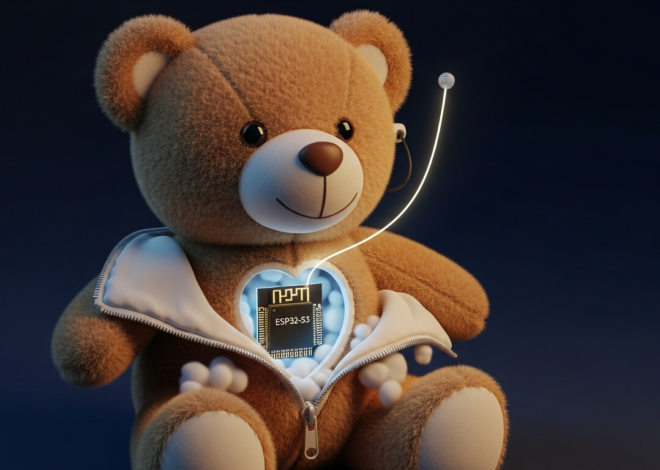
Can a startup building a teddy bear app replicate that? I’m skeptical.
We are walking into a minefield in 2026. Every toy company is going to rush to integrate OpenAI or Anthropic APIs into their products to replicate this “Santa effect.” But they don’t have military-grade security budgets. I’m already dreading the headlines later this year when some cheap smart-toy leaks a database of kid-generated stories and selfies.
If you’re a developer looking at this, don’t just copy the features. Look at the guardrails. The system refused to generate scary toys. It didn’t store the selfies (at least, it claimed not to). It felt safe. That “safety” feeling is the product. Without it, parents will burn your brand to the ground.

Predictions for the 2026 Toy Box
So, where does this leave us? Based on what I saw over the holidays, here is where I think the money moves next.
1. The “Design-to-Buy” Pipeline
Why buy a generic action figure when you can design one? I expect a major retailer to launch a kiosk or app by the end of 2026 where kids use AI to design a toy, and a 3D printer in the back (or a warehouse) spits it out. The Santa Tracker proved kids can prompt. The manufacturing just needs to catch up.
2. Dynamic Bedtime Stories
Books are great. I love books. But an app that listens to a child’s day and weaves those specific events into a bedtime story that night? That’s the killer app for weary parents. “Once upon a time, a knight named [Your Kid] who ate [Today’s Lunch] fought a dragon that looked like [The Neighbor’s Dog].” It’s technically trivial now. It’s just a matter of packaging.

3. Legacy Brands Will Panic-Pivot
Watch for Barbie and LEGO to announce “AI-enhanced” creativity tools before the summer. They have to. They can’t let a seasonal tracker out-innovate them on engagement. They have the IP, but they lack the agility. It’s going to be messy, and some of it will be terrible, but they have no choice.
The Bottom Line
I usually roll my eyes at “AI for kids.” It often feels like a solution looking for a problem, or worse, a way to automate parenting. But the Santa Tracker implementation felt different because it focused on play rather than consumption.
It used the tech to spark an idea, then got out of the way so the kid could color, draw, or pretend. That’s the sweet spot. If the industry learns the right lesson here, 2026 might actually be a fun year for toys. If they just learn “add chatbots to everything,” we’re in for a long, annoying year.
Either way, the standard for “holiday magic” just got a lot more complicated. Good luck topping this next December.